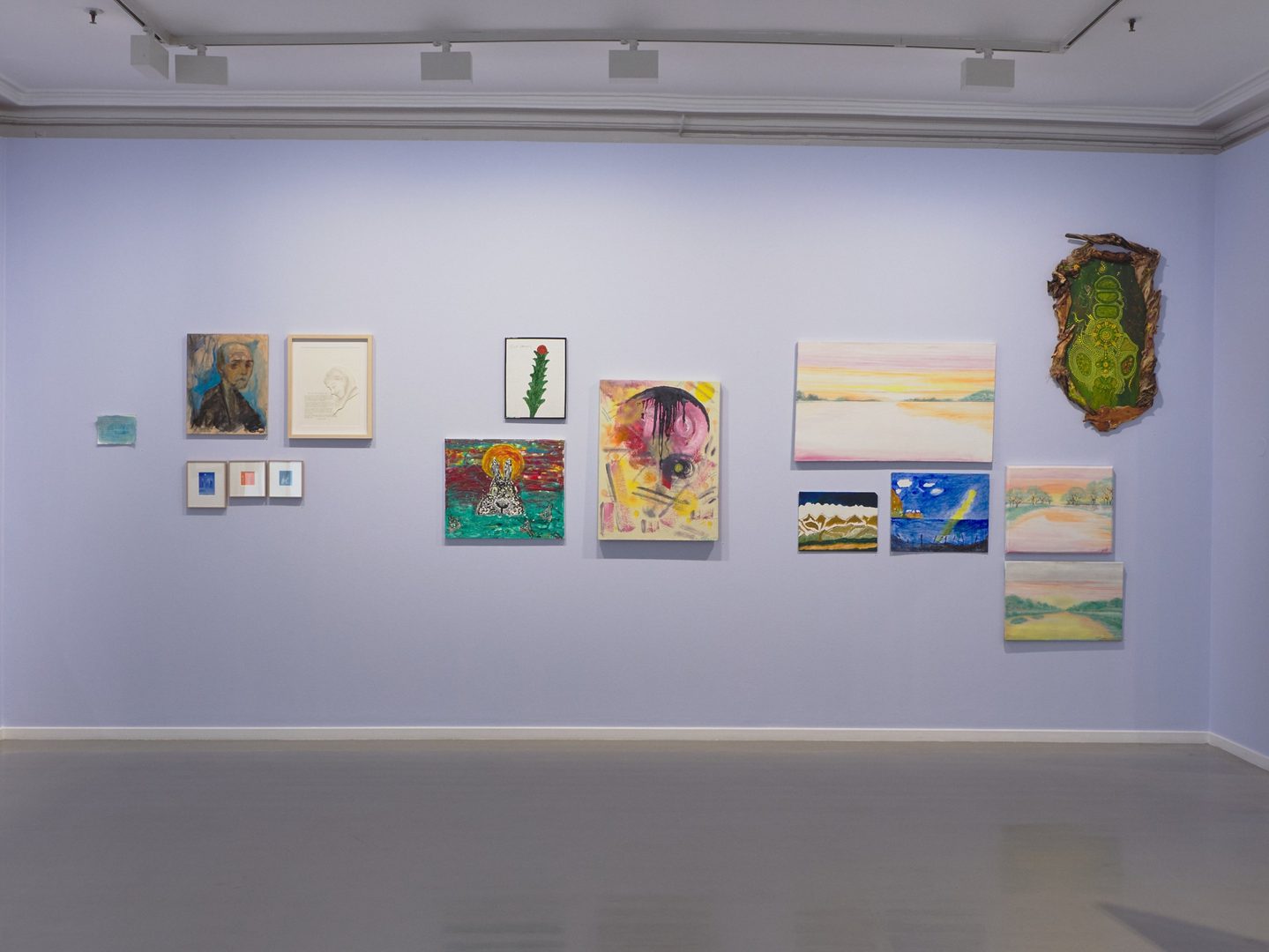
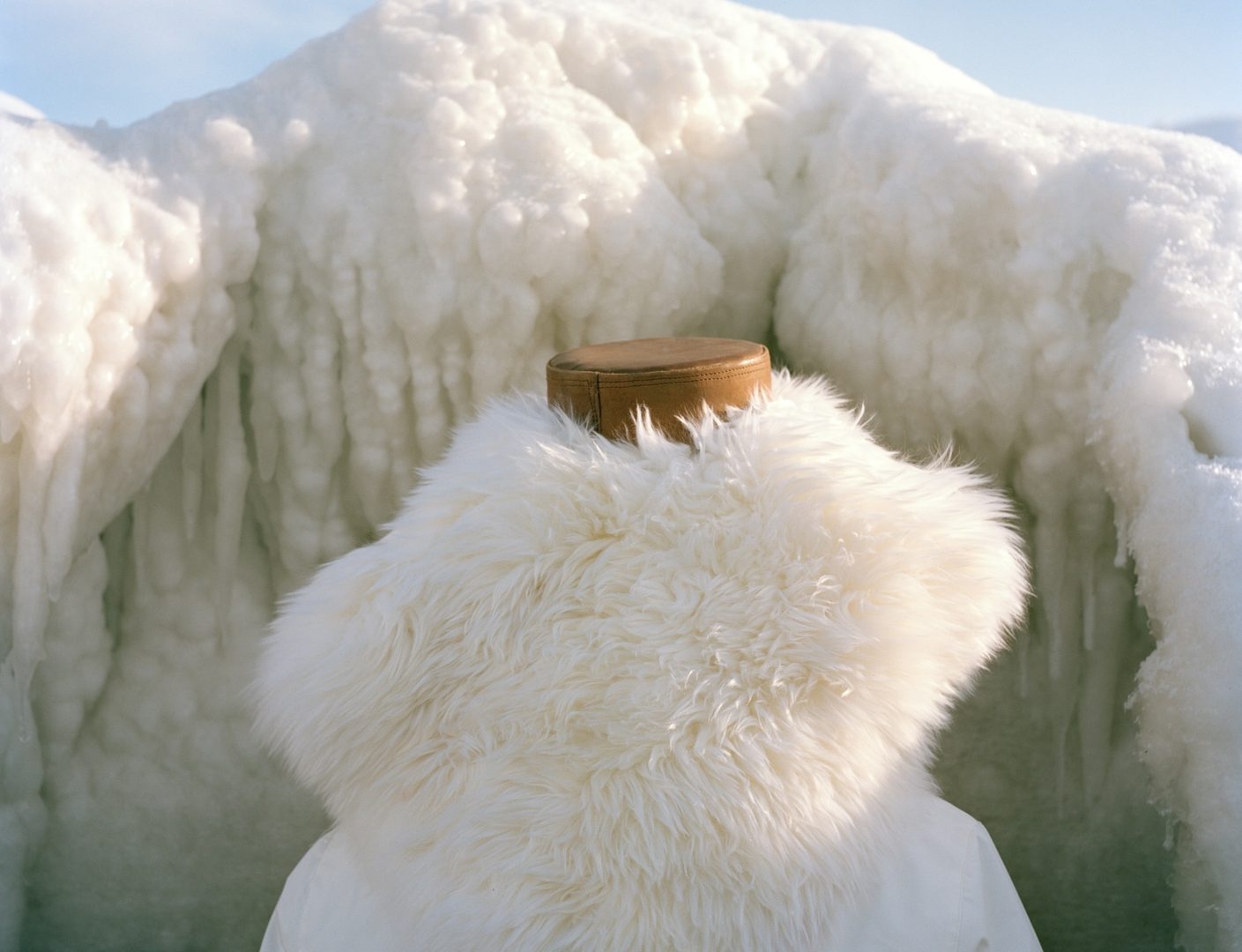
Sparebankstiftelsen DNB Grant Exhibition 2026
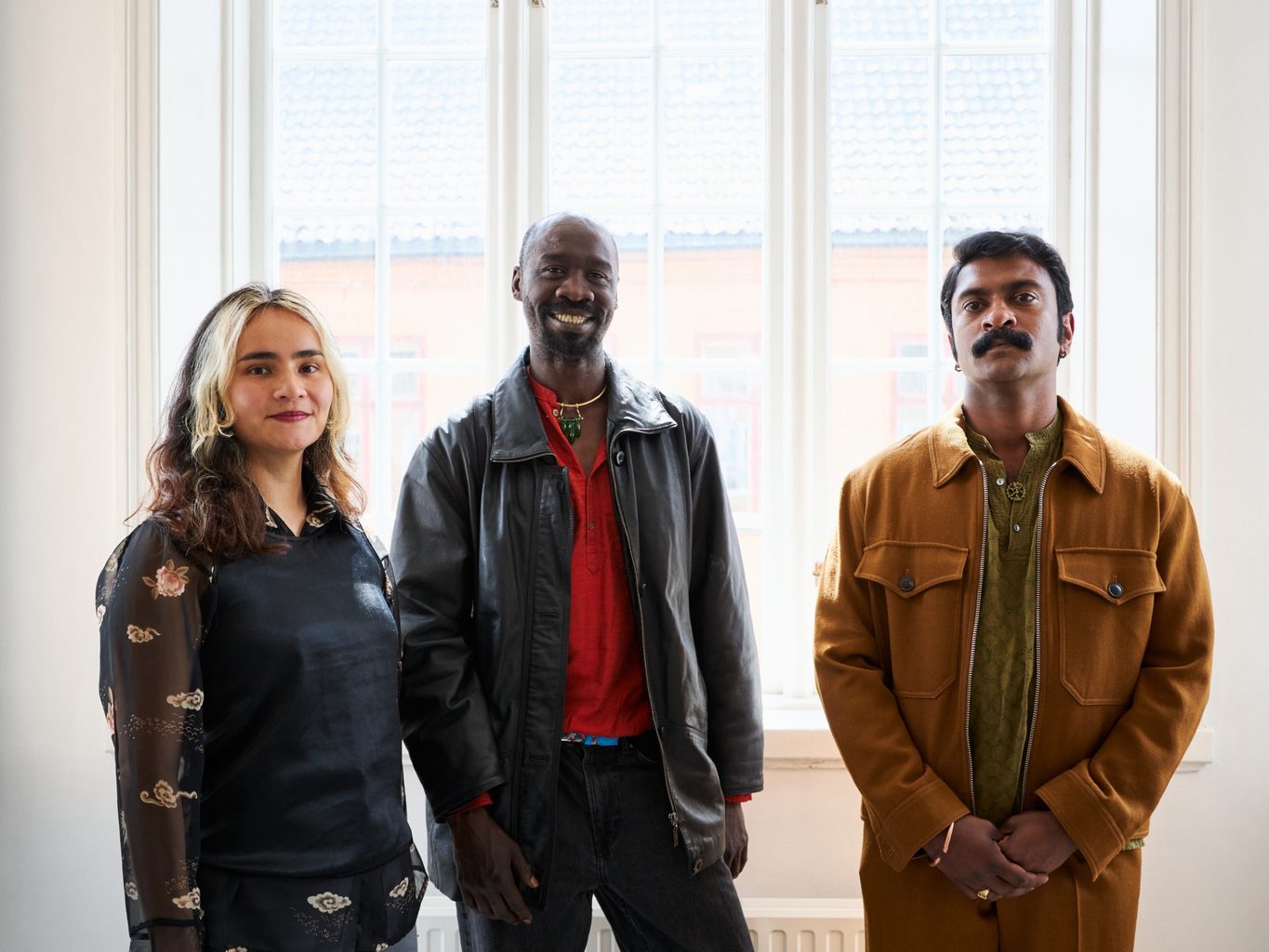
Eli Mai Huang Nesse, Khalid Shatta and Ilavenil Vasuky Jayapalan. Photo: Henrik Follesø Egeland
Oslo Kunstforening is pleased to present Sparebankstiftelsen DNB Grant Exhibition 2026. This year’s exhibiting artists are Eli Mai Huang Nesse, Khalid Shatta and Ilavenil Vasuky Jayapalan.
The grant, first established by Oslo og Akershus Sparebank in 1986, has played a key role in supporting artistic practices in Norway. In 2008, Sparebankstiftelsen DNB decided to continue the grant through an annual exhibition organised by Oslo Kunstforening. Today, the exhibition is an important part of Oslo Kunstforening’s programme and continues a long tradition of supporting and promoting contemporary art. To date, 83 artists have taken part in the exhibition, and 24 have received the grant. The recipient of the grant of NOK 300.000 will be announced on 5 January 2027.
Oslo Kunstforening is Norway’s oldest art institution, founded in 1836. For 190 years it has been a venue for artists, art and audiences. The grant exhibition is part of this history and it is a key part of Oslo Kunstforening’s work to create space for different artistic expressions and perspectives.
This year’s jury consists of jury chair Hege Nyborg (visual artist), Stina Högkvist (director, Nordnorsk Kunstmuseum), Ahmed Umar (visual artist), Linda Lamignan (visual artist) and Mikael Damstuen Brkic (director, Oslo Kunstforening).
We extend our sincere thanks to Sparebankstiftelsen DNB for a long-standing and valuable partnership, and to this year’s artists and jury for their work and commitment. The exhibition runs from 12 November 2026 to 17 January 2027. During the exhibition period, we invite you to the following events:
12 November, 6 pm: Exhibition opening
2 December, 6 pm: Conversation with all three artists
9 January, 2 pm: Conversation with the grant recipient
All events take place at Oslo Kunstforening. Welcome!
Eli Mai Huang Nesse
Awww
Eli Mai Huang Nesse (b. 1992) is an artist, scenographer and filmmaker based in Oslo. Her artistic practice explores themes such as human relationships, the need for safety, and how hope and community can emerge in difficult circumstances.
In the video installation Awww, Nesse explores what it means to move and to be moved. The work consists of nine screens mounted on a wooden structure. Combining her own footage, family home videos, voice-overs and subtitles, she examines connections between physical movement, emotional responses, and social and political mobilisation.
The video essay moves between personal experience and larger events in society, between past and present, and between digital and physical communities. The narrative does not follow a chronological structure. It unfolds through associations, repetitions and links between seemingly unrelated events, and in this way Nesse combines documentary footage with poetic and essayistic devices.
Threads, knots and weaving recur throughout the work. They function as images of human connection and of how individual lives are woven into larger social contexts. The motifs also refer to the idea of the thread of life, familiar from sources such as Greek mythology, where the goddesses of fate spin the thread and decide the course of human lives.
A key reference in the work is the concept of kama muta, a term found in research on the experience of being deeply moved by closeness, love or community. Nesse explores how such feelings can arise both in close relationships and through collective events. Personal memories, popular culture and national experiences of togetherness all become part of the same inquiry.
With Awww, Nesse draws attention to how emotions connect people, and how belonging can emerge across experiences, places and generations.
Khalid Shatta
We Are All a Living Archive
Khalid Shatta (b. 1989) works with photography, installation, drawing, painting and sculpture. Drawing on Sudanese cultural heritage, he explores cultural memory, identity and histories shaped by colonialism, conflict and displacement. A recurring question in his practice is how the past is documented, interpreted and passed on.
In the exhibition We Are All a Living Archive, Shatta examines the relationship between memory, history and representation. His starting point is the question of who has the authority to document and preserve human experience, and how archives shape our understanding of societies and cultures.
The exhibition consists of a series of paintings in various formats. Their imagery draws on symbols and motifs from the ancient civilisations of the Nile Valley, a cultural history that is significant to Shatta’s own sense of identity and belonging. Through the paintings, he explores how historical narratives can be preserved, reworked and given new expression.
The frames are also part of this exploration. By using reclaimed frames, Shatta shows how objects carry their former uses and histories with them. The frames take on a new function and become part of an archive that can always be changed and reinterpreted.
An important starting point for the project was Shatta’s work with historical photographic archives for the group exhibition Inside Archives at the Museum für Fotografie in Berlin earlier in 2026. Among other material, he examined photographs of the Nuba peoples of Sudan taken in the 1960s and 1970s by the German filmmaker and photographer Leni Riefenstahl. For Shatta, who himself has roots in the Nuba Mountains, the material raised questions about how people and communities have been documented and portrayed through outside perspectives.
In We Are All a Living Archive, Shatta builds an archive of his own, based on personal and collective experience. The archive is not understood as a fixed collection of works. Instead, it lives on through memories, relationships, cultural practices and everyday life. In the works, Shatta reflects on how history exists not only in institutional collections, but also in the people who carry it on.
Ilavenil Vasuky Jayapalan
Nasjonsbyggingens bundne form, vårt sinn og det formløse i Murti
Ilavenil Vasuky Jayapalan (b. 1991) is an artist of Eelam Tamil background who grew up in Groruddalen in Oslo. He works with film, sound, sculpture, poetry, performance and installation. In his practice, he explores how the body, desire and belonging are shaped by historical, biological and technological conditions. He has a particular interest in epistemology, consciousness, cosmology and artificial intelligence.
In the exhibition Nasjonsbyggingens bundne form, vårt sinn og det formløse i Murti [The Bound Form of Nation-Building, Our Mind and the Formless in Murti], the gallery is transformed through visual references to the meditation caves of the Siddhar tradition, places of contemplation and spiritual practice. Together, red and white wall stripes, textile works, sculptures in Grorud granite and a video work explore the relationship between cosmology and processes of nation-building.
The exhibition title refers to Murti, a concept within Sanātana Dharma in which a material form embodies the boundless consciousness of the universe. Jayapalan places this idea of form in relation to Aruvam – the formless. He uses this dynamic to examine how language, categorisation and power give particular shapes to human experiences, political movements and historical events.
The sculptures in Grorud granite connect the exhibition to Norwegian labour history and nation-building. When a type of rock is named after a Norwegian place, it is written into the geography and knowledge traditions of the nation state. Granite has been a key building material in the capital, and Groruddalen also became an important base for the Eelam Tamil diaspora. Jayapalan shapes the stone with references to Tamil cosmology and philosophy. In doing so, he reflects on how the invisible is given form, and how things we take for granted go unacknowledged – the labour, the people and the privileges that nation-building rests on.
Eli Mai Huang Nesse
Eli Mai Huang Nesse (b. 1992) is an artist, scenographer and filmmaker based in Oslo. In her work, she explores the need for safety nets and coping strategies, and how to hold on to hope when your surroundings are falling apart. Nesse holds a master’s degree from the Academy of Fine Art at Oslo National Academy of the Arts and a bachelor’s degree from the Royal Institute of Art in Stockholm. Her recent projects include a solo exhibition at Kunstnernes Hus (2024) and set and costume design for Sukker at Det Norske Teatret (2025). Her films have been screened at festivals including the Bergen International Film Festival and SEAnordic in Seattle.
Khalid Shatta
Khalid Shatta (b. 1989) is based in Oslo and works with photography, installation, drawing, painting and sculpture. In his work, he explores cultural memory, representation and histories shaped by displacement and colonialism, drawing on Sudanese cultural heritage and his own roots in the Nuba Mountains. Shatta studied fine art at Sudan University of Science and Technology and at Prosjektskolen in Oslo. His recent projects include the group exhibition Inside Archives at the Museum für Fotografie in Berlin (2026). He has also had solo exhibitions at Nordic Black Theatre (2022) and Kunsthall Oslo (2021). Shatta has taken part in a number of residency programmes, including one at Museum Boijmans Van Beuningen in Rotterdam in 2023, organised by PRIO.
Ilavenil Vasuky Jayapalan
Ilavenil Vasuky Jayapalan (b. 1991) is based in Oslo and works with film, sound, animation, performance, poetry and installation. In his work, he explores how the body, desire, identity and belonging are shaped by historical, biological and technological conditions, drawing on Eelam Tamil experiences of forced migration and genocide. Jayapalan studied at the Oslo National Academy of the Arts and has had solo exhibitions at Kunsthall Oslo (2024), Hulias (2023) and K4 Galleri (2021). He is currently working on Lillomarka Linga Aalayam, an ongoing site-specific project at Lauritzdammen in Lillomarka, in collaboration with KORO (Public Art Norway).