Lilibeth Cuenca Rasmussen
A Chimera Full of Love, Guilt and Frozen Vigor
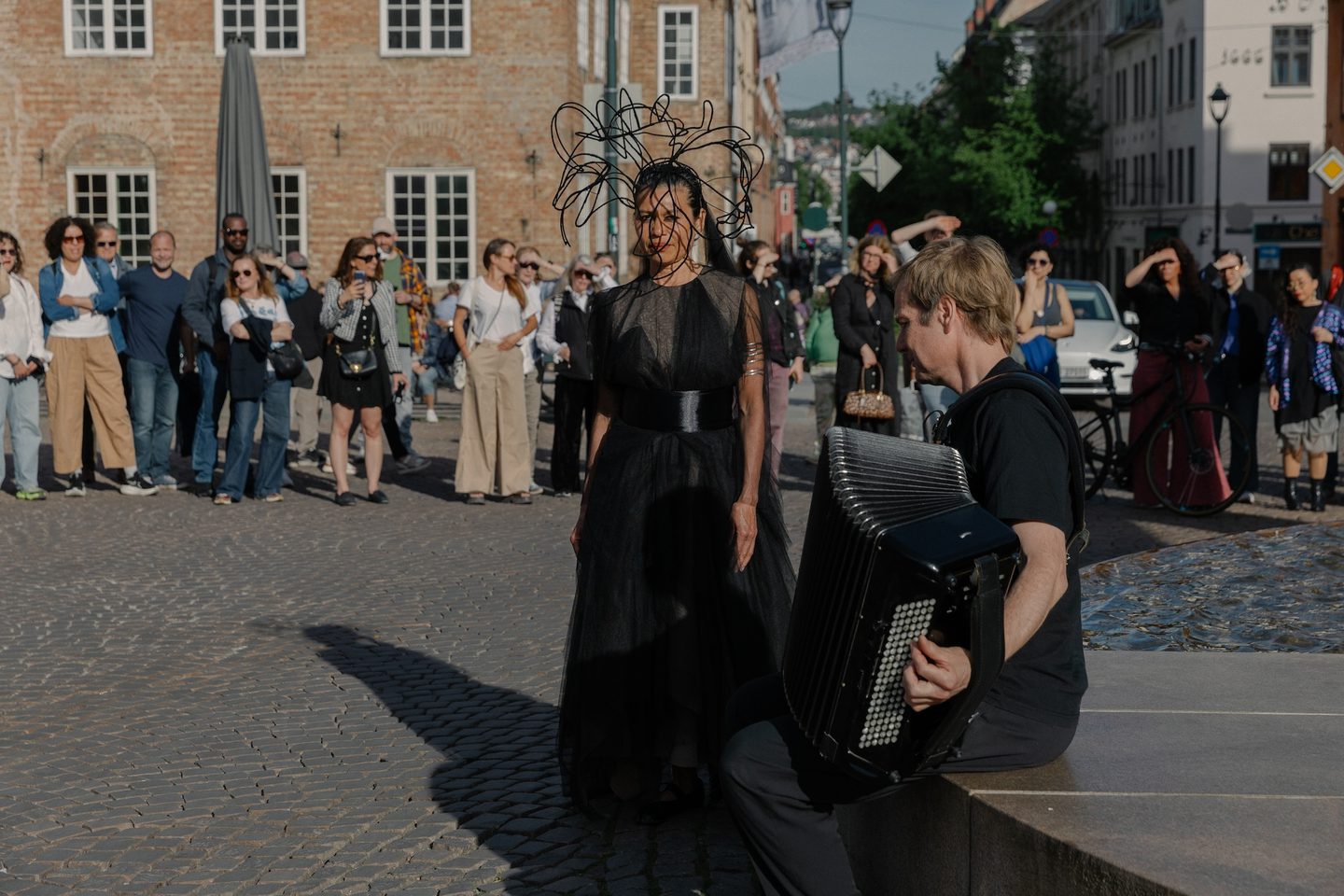
Performance: Lilibeth Cuenca Rasmussen, Chimera Power and the Seven Women in Heaven (2026). Photo: Kristine Jakobsen
Oslo Kunstforening is pleased present the solo exhibition A Chimera Full of Love, Guilt and Frozen Vigor, by Lilibeth Cuenca Rasmussen.
Lilibeth Cuenca Rasmussen (b. 1970) is considered one of Denmark’s leading contemporary artists, and this is the first time her work has been presented in a major exhibition in Norway. The exhibition presents earlier and new work, including a performance developed specifically for the occasion.
This year marks the 190th anniversary of Oslo Kunstforening, Norway’s first art institution, founded in 1836, and the exhibition is part of the anniversary celebration. On the ground floor of our premises, visitors are invited into an in-depth exploration of the institution’s archive and exhibition history. Here, the historic plaster ceiling – adorned with mythical creatures and virtues drawn from the seventeenth-century worldview – serves as a point of departure for Cuenca Rasmussen’s presentation of her own ”archive material”. This material reflects an extensive artistic practice in which questions of identity, representation, and staging are central. Cuenca Rasmussen’s work frequently takes form as performance, which is subsequently carried forward and transformed across media including video, photography, sculpture, and installation – generating spaces where existential questions take shape and formal strategies unfold in dialogue with lived experience.
The exhibition’s starting point is the figure of the chimera – a fire-breathing hybrid creature from Greek mythology, composed of a lion, a serpent, and a goat within a single body. The figure operates as a metaphor for fragmented identity, the coexistence of contradictions, and the layered nature of personal history. Cuenca Rasmussen was born in Manila, the Philippines, where she lived until the age of eight, before her family relocated to Denmark. Across geographic and cultural contexts, the chimera becomes a recurrent motif for shifting political, cultural, and personal experiences – and for what the artist herself describes as in-betweenness: a liminal condition that resists fixed positions and categorisations.
The exhibition spans over two decades of artistic production, from the early performance work Cock Fight Song (2006) to more recent works including the sculpture Meteorite (2019), the video work 7 Stages of Gynophobia (2023), and the performance Chimera Power and the Seven Women in Heaven (2026), alongside new sculptures and photographs. Self-staging is a recurring theme across different forms of materiality – whether as a rotating sculpture, a fragmented body, or a figure carved in acacia wood. Together, the works bear witness to a persistent inquiry into art-historical hegemonies, patriarchal structures, and personal experiences of language and diaspora, in which the humorous and the serious operate in concert.
The exhibition is supported by the Ny Carlsberg Foundation, the Arts Council Norway, the Danish Arts Foundation, and the Knud Højgaard Foundation. The opening event is part of Oslo Art Weekend. The artist would like to thank Jesper N. Jørgensen, Line Poulsen and Lone Skovgaard.
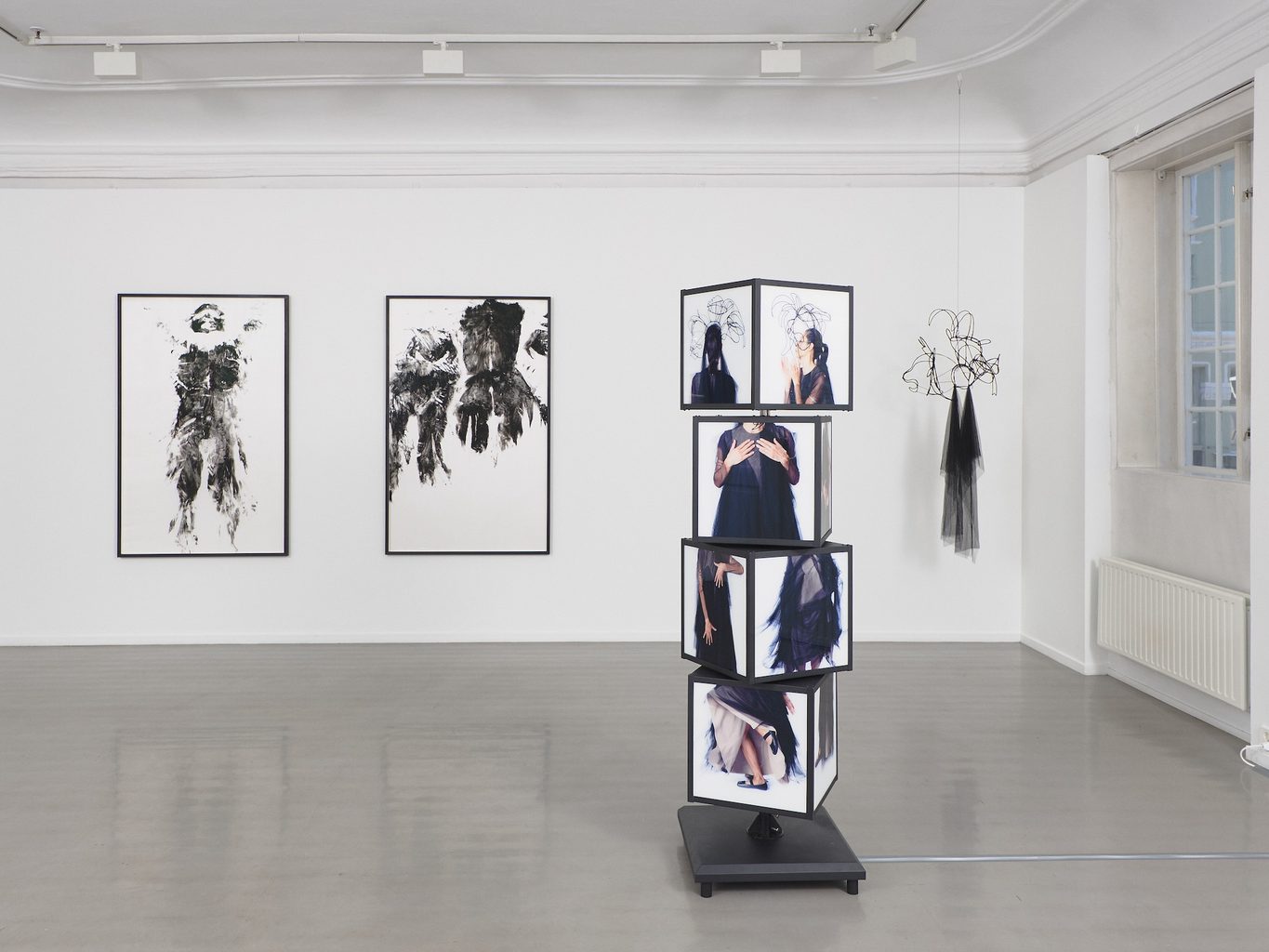
Octorecto, Octoabdomonis, 2020 and Complex Completeness, 2026
Room 1
Untitled (Bergen), 2026
Drawing on both Norwegian and Filipino craft traditions of wood carving, the artist inscribes herself into this lineage with a wry, humorous sensibility, using her own face as the source material. The fire-breathing chimera is simultaneously domesticated and rendered playful and approachable – like a pet to be stroked. Untitled (Bergen) is carved from Norwegian spruce, while the work in room 3, Untitled (Baguio), is carved from acacia, a wood common to the Philippines.
Octopectus, Octocorporis, Octorecto, Octoabdomonis, 2020
In this series, the artist uses ink sourced from squid, applied to her own body and transferred directly onto silk canvas through rapid impressions. Familiar bodily forms are transformed into abstracted traces through fragmentation, repetition, and displacement. The works present themselves as residues of an action in which a corporeal gesture is arrested in the material – a convergence of movement, touch, and imprint.
Complex Completeness, 2026
The figure is caught in a state of continuous rotation, never coalescing into a unified whole. The sculptural headdress casts silhouettes of the classical chimera – goat, serpent, and lion. In the performance Chimera Power and the Seven Women in Heaven (taking place at the exhibition opening), the figure manifests in physical presence, with the plaster ceiling of the first floor – adorned with its various virtues, animals, and hybrid forms – serving as a point of departure.
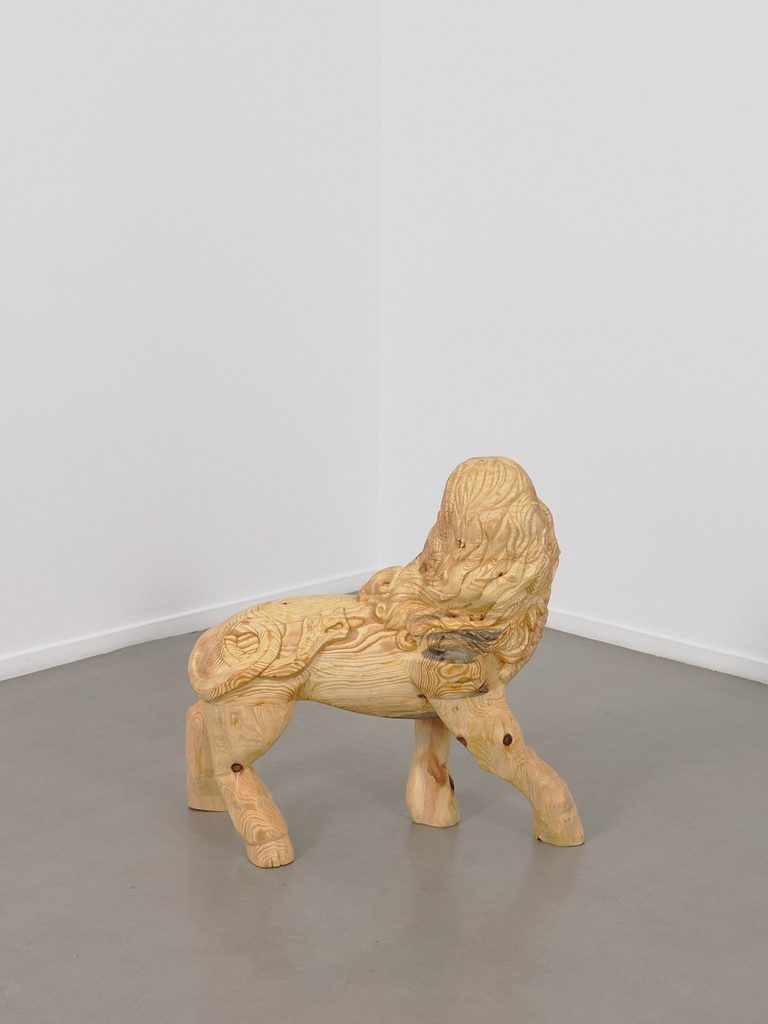
Uten tittel (Bergen), 2026
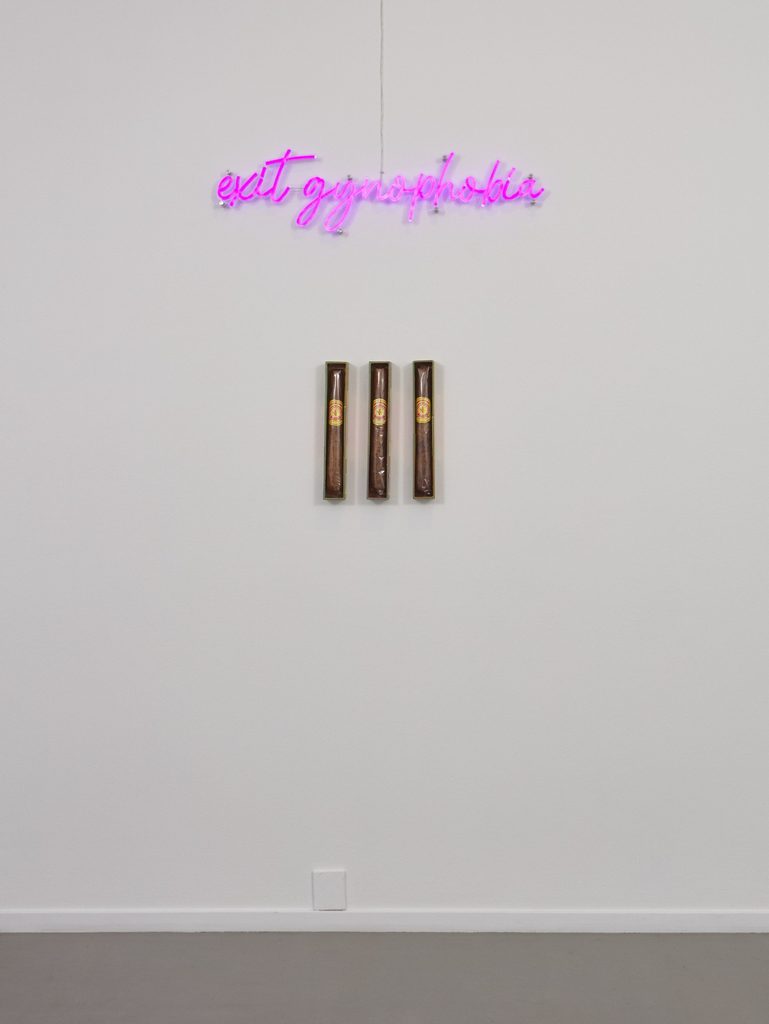
exit gynophobia, 2026
Room 2
exit gynophobia, 2026
exit gynophobia a is an installation comprising an audio work. The sound piece is built around a performance in which the audience is hypnotised. Its purpose is to strengthen the visions and values of feminism, while counteracting and diminishing the structures of patriarchal power. The audio file is available for download for private use and may be shared freely.
7 stages of Gynophobia, 2023
An authoritarian, cigar-smoking figure ascends the Rundetårn – a phallic-shaped tower in Copenhagen. Three white figures – a flautist and two dancing bodies – follow in her wake, giving physical and sonic form to what is spoken. The phenomenon of ”gynophobia” – fear of or aversion to women – has historically obstructed women’s access to power and continues to operate as a mechanism of suppression.
Meteorite, 2019
Meteorite is assembled from casts of three distinct faces: the artist’s own, and those of her parents, who are from Denmark and the Philippines respectively. Meteorites from our solar system are billions of years old and fall to earth at irregular intervals – in this way the sculpture may be understood as a reflection on the play of chance between origin, birthplace, family, and belonging.
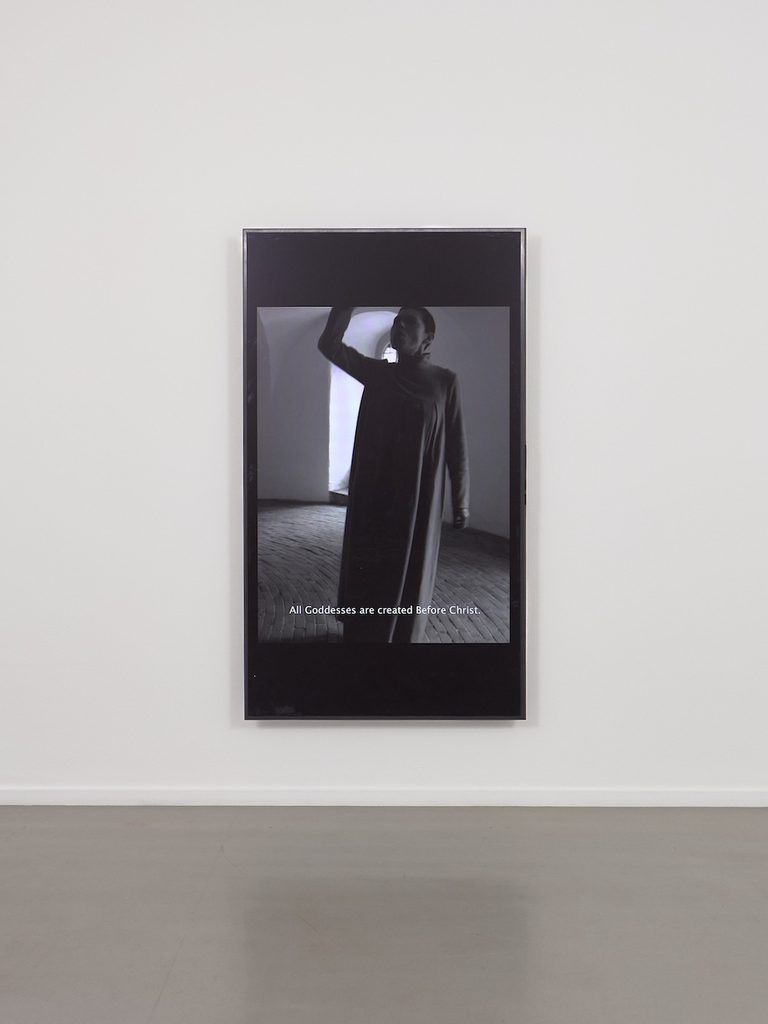
7 stages of Gynophobia, 2023
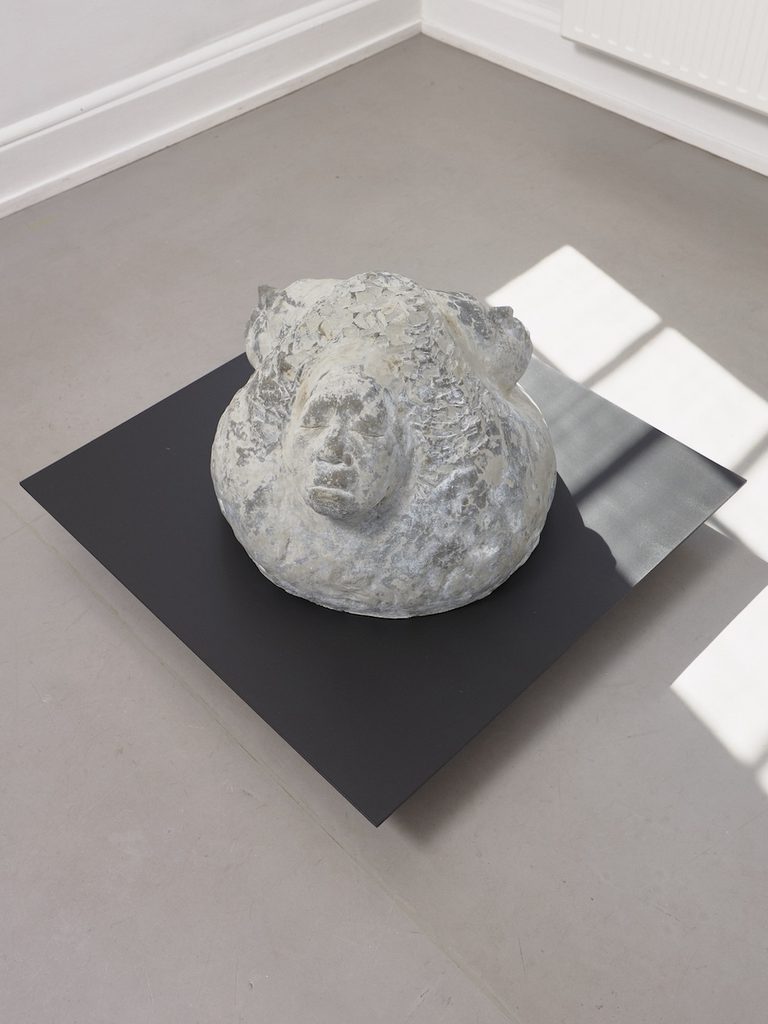
Meteorite, 2019
Room 3
Golden Fight (Brancusi), 2023
Ten cages have been modified and plated with 24-carat gold. Originally used as portable cockfighting cages, they are presented here alongside authentic ”anting-anting” – good-luck amulets from the Philippines. Sabong, or cockfighting, is considered a national sport in the Philippines, a cultural sphere in which luck, ritual, and superstition play a central role, making talismans an integral part of the experience. Golden Fight (Brancusi) examines how value is constructed and redefined through materiality and context. The reference to Constantin Brancusi (1876–1957), a pioneer of sculptural abstraction, connects the work to the idea of transformation – the elevation of ordinary, everyday objects into bearers of symbolism, aura, and new meaning
(Dis)Appearing, 2017
Through casts of face, hand, knee, and foot placed upon mirrors, isolated parts of the body emerge as autonomous representations – appearing almost more real than their originals. Severed from the whole, each body part acquires its own weight and presence, while the fractured surfaces of the mirrors generate displacements between object, reflection, and viewer. The work constructs a body that simultaneously appears controlled and dissolved, composite and alive.
Untitled (Baguio), 2026
Drawing on both Norwegian and Filipino craft traditions of wood carving, the artist inscribes herself into this lineage with a wry, humorous sensibility, using her own face as the source material. The fire-breathing chimera is simultaneously domesticated and rendered playful and approachable – like a pet to be stroked. The sculpture in this room, Untitled (Baguio), is carved from acacia, a wood common to the Philippines, while Untitled (Bergen) is carved from Norwegian spruce.
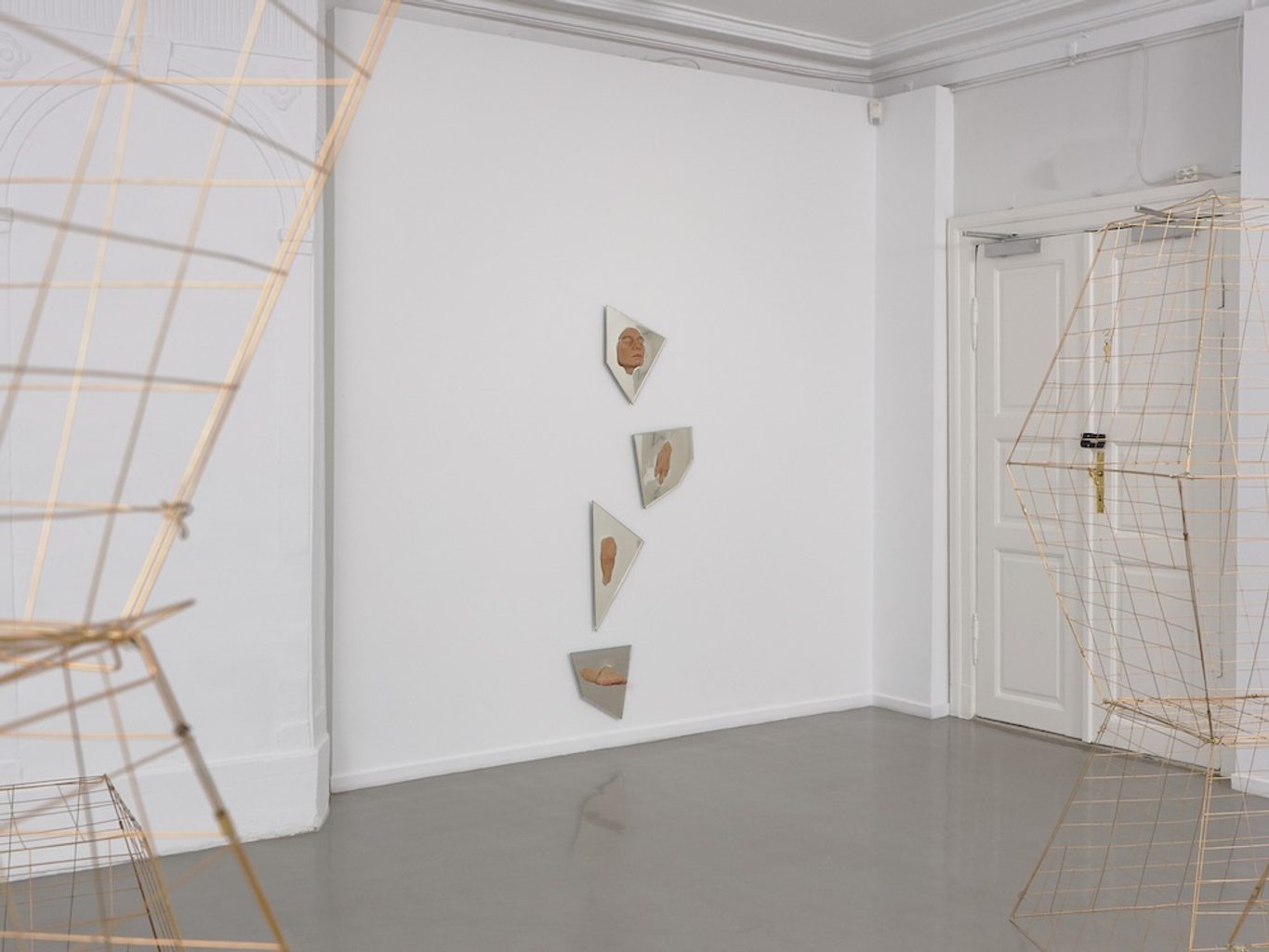
(Dis)Appearing, 2017 and Golden Fight (Brancusi), 2023
Room 4
On view here is a small selection from Lilibeth Cuenca Rasmussen’s extensive body of video works – specifically works in which the anthropomorphic is foregrounded and the artist-self is presented as a hybrid figure between human and animal. Generically, the videos draw on the tradition of the music video’s condensed format, delivering their content through song and music.
Octopada, 2017
The character is inspired by the octopus and mirrors its attributes: the capacity to handle multiple tasks simultaneously and to adapt to its surroundings in both form and colour. When the situation demands – particularly in the face of danger – it can camouflage itself and merge seamlessly into its environment. Its eight tentacles function as additional hands, symbolising the ability to create, execute, and balance multiple things at once, while also reflecting the demands placed on the individual in contemporary life. The character is able to mimic the colours and patterns of its surroundings – whether the room it inhabits or the clothing of those nearby – visually and symbolically dissolving into the whole.
Cock Fight Song, 2006
The work examines power, gender, and identity through a figure that contains within itself both subject and object. The roles of victim, trophy, winner, and loser are interwoven within the frame of a macho culture, rendering visible the ways in which these positions blur and bleed into one another. The work opens a critical space for reflection on femininity, objectification, and the social structures that shape the gaze directed at the body.
Turritopsis Forever, 2026
Inspired by the biologically immortal jellyfish Turritopsis dohrnii, the work explores regeneration, time, and existence through a technology-based performance combining light, body, and sound. The figure moves through liminal non-places within a wordless universe, opening the work to reflection on cyclical processes, renewal, and the presence of the body in its encounter with the world.
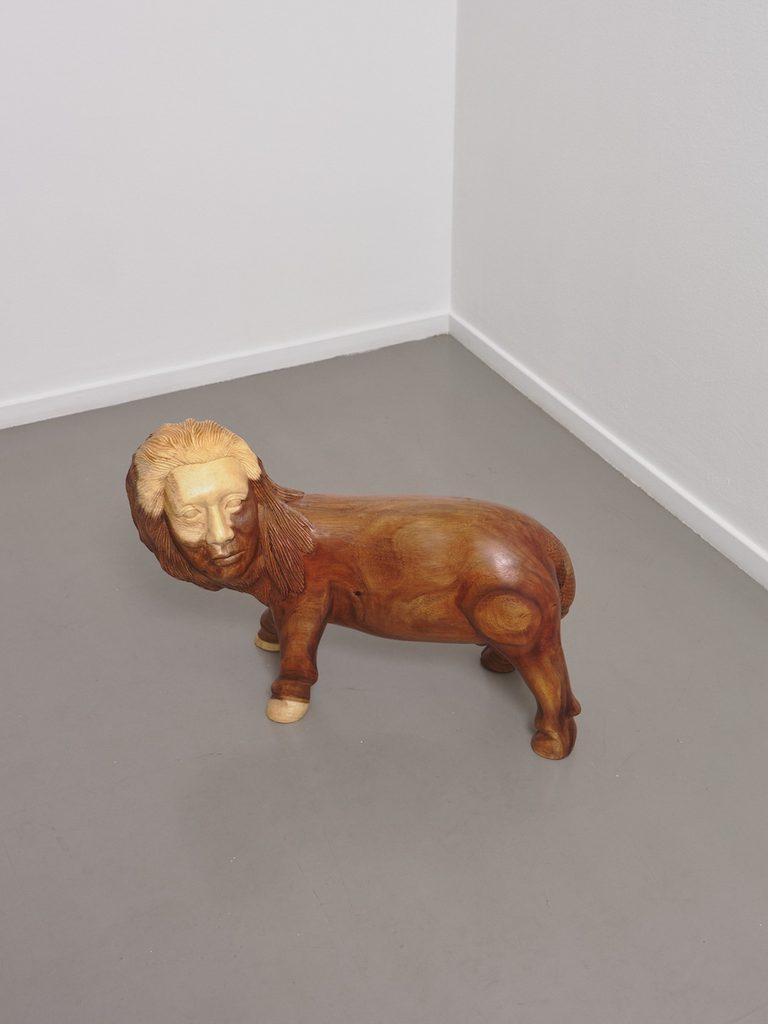
Uten tittel (Baguio), 2026
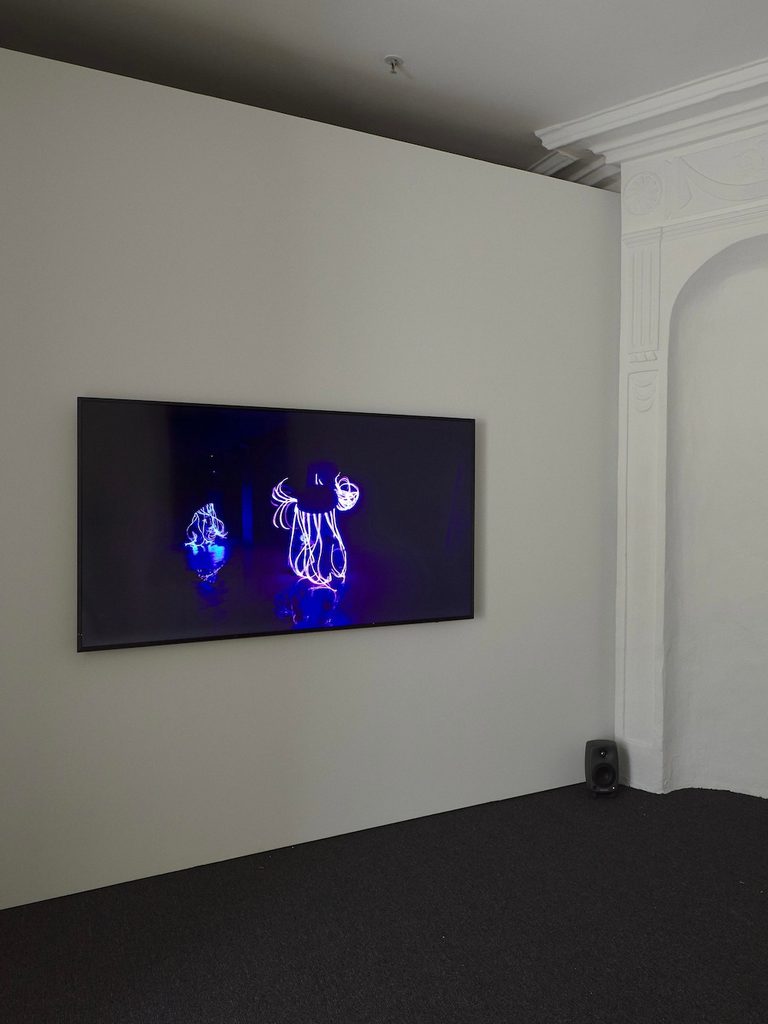
Turritopsis Forever, 2026
Bio
Lilibeth Cuenca Rasmussen (b. 1970, Manila) is a Danish-Filipino, internationally recognised artist who has presented exhibitions and performances worldwide. Cuenca Rasmussen lives in Copenhagen and holds a degree from the Royal Danish Academy of Fine Arts. For the past decade she has worked as a professor at the Bergen Academy of Art and Design, Faculty of Fine Art, Music and Design, University of Bergen.
Lilibeth Cuenca Rasmussen has exhibited and performed at venues such as Kiasma in Helsinki, the Brooklyn Museum in New York, Tate Modern in London, Performa in New York, the Venice Biennale, the Thessaloniki Biennale, the Busan Biennale, The Drawing Room, Röda Sten Konsthall in Gothenburg, ARoS Aarhus Art Museum, and the National Gallery Singapore. Cuenca Rasmussen is represented in collections including ARoS, Ordrupgaard, Rønnebæksholm, Borås Konstmuseum, Helsinki Art Museum, Horsens Kunstmuseum, Museet for Samtidskunst Roskilde, HEART Museum of Contemporary Art Herning, Statens Kunstfond, Statens Museum for Kunst, Malmö Konstmuseum, KIASMA Museum of Modern Art Helsinki, and Odense Bys Kunstfond.
Performance
The performance Chimera Power and the Seven Women in Heaven (2026) is presented at the exhibition opening. The performance leads the audience from Christiania Torv and into the exhibition spaces of Oslo Kunstforening, where history, rituals and hybrid bodies converge. Through music, movement and text, seven female figures in the building’s 17th-century plaster ceiling are brought to life – each embodying a virtue: temperance, strength, wisdom, justice, love, hope and faith. In collaboration with accordionist Frode Haltli, the performance moves between improvised folk melodies and early baroque music, concluding as a collective purification – of the body and of history.
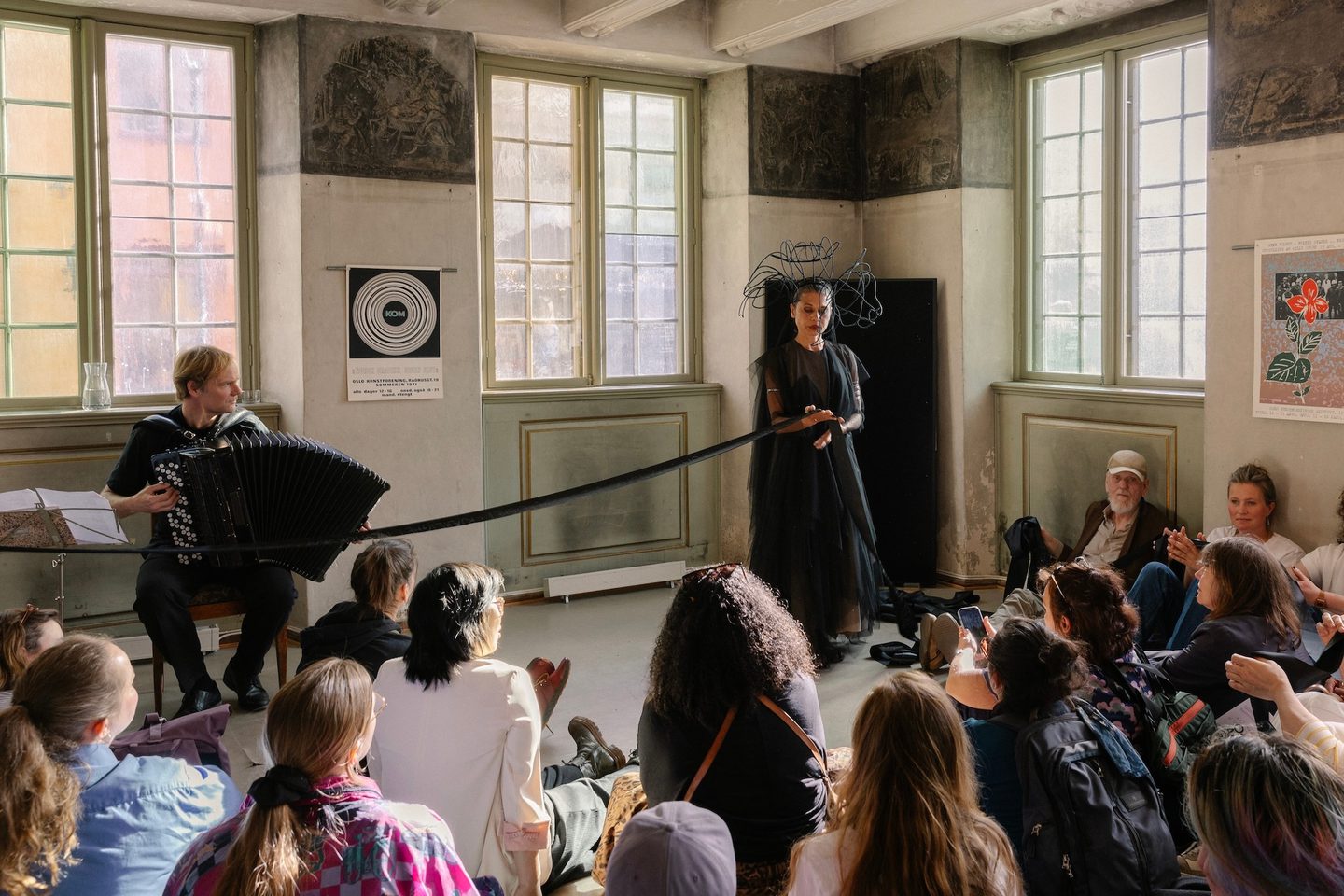
Performance: Lilibeth Cuenca Rasmussen, Chimera Power and the Seven Women in Heaven (2026). Photo: Kristine Jakobsen